
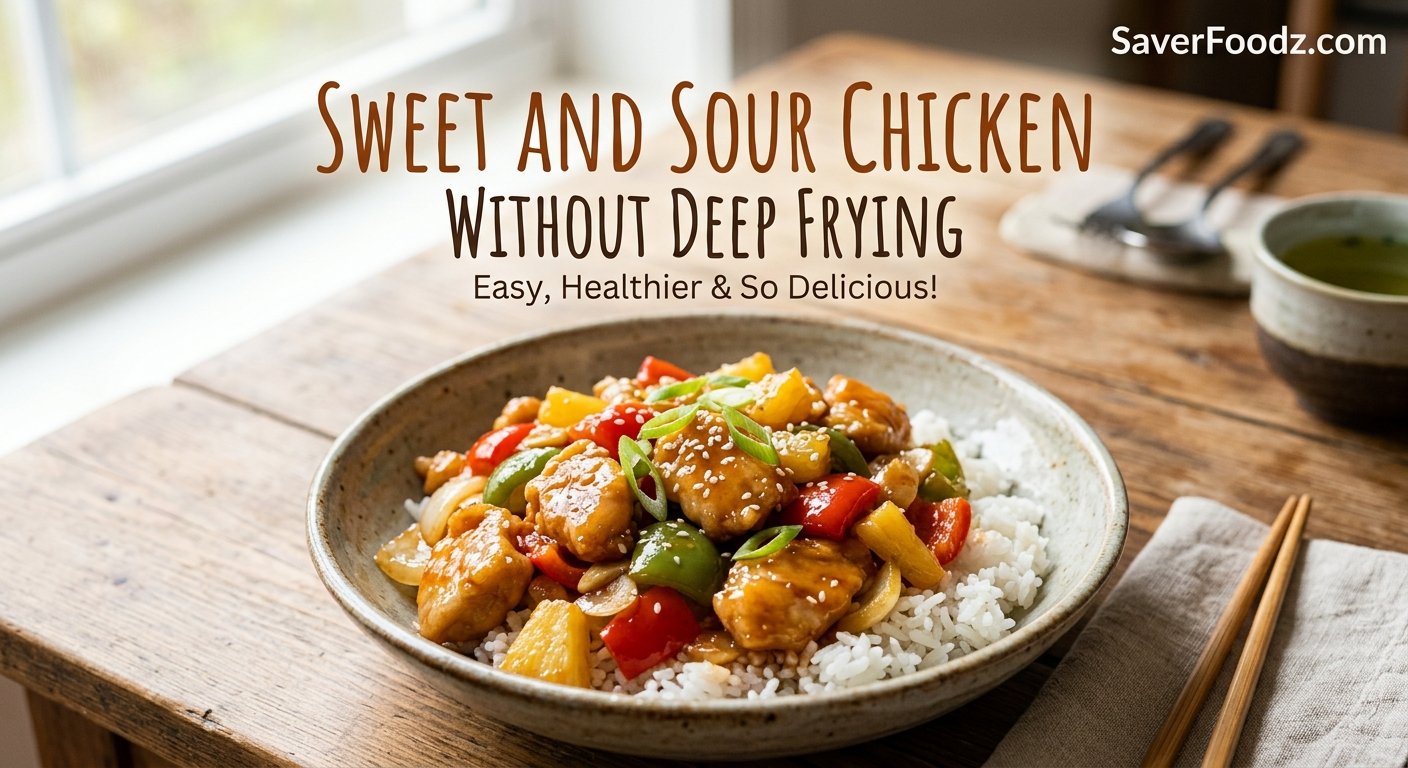
Sweet and Sour Chicken Without Deep Frying
If you love sweet and sour chicken but do not want to deal with a pot full of hot oil, this sweet and sour chicken without deep frying is exactly the kind of recipe you should try. The chicken is lightly coated and cooked in a skillet until golden, then tossed with colorful vegetables and a homemade sweet and sour sauce.
This recipe gives you that familiar takeout-style flavor without deep-frying the chicken. It is easy enough for a weeknight dinner, uses simple ingredients, and comes together in one pan. The chicken stays tender inside while the sauce adds the perfect balance of sweetness, tanginess, and savory flavor.
Whether you are trying to make lighter meals at home or simply do not enjoy deep frying, this recipe is a great option. Serve it over steamed rice, noodles, or even your favorite grain for a filling homemade dinner.
Why You Will Love This Sweet and Sour Chicken
There are plenty of reasons to keep this recipe in your regular dinner rotation.
First, there is no deep frying. You only need a small amount of cooking oil to brown the chicken in a skillet. This makes the cooking process easier and means you do not have to worry about disposing of a large amount of used oil afterward.
The second reason is the sauce. Homemade sweet and sour sauce tastes fresh and vibrant, and you can easily adjust it according to your preference. If you like it sweeter, add a little extra honey or brown sugar. If you prefer a sharper flavor, increase the vinegar slightly.
The vegetables also make this dish colorful and satisfying. Bell peppers and onions work especially well, but you can add other vegetables depending on what you have in your refrigerator.
Most importantly, this sweet and sour chicken without deep frying is practical. You can have a restaurant-inspired dinner on the table without complicated techniques or hard-to-find ingredients.
Ingredients You Will Need
The ingredient list is simple, and most of these items may already be in your kitchen.
For the Chicken
- 1 ½ pounds boneless, skinless chicken breasts or thighs
- ½ cup cornstarch
- ½ teaspoon salt
- ¼ teaspoon black pepper
- 1 teaspoon garlic powder
- 2 tablespoons cooking oil
Chicken thighs are particularly juicy, but chicken breast works beautifully if that is what you have available.
For the Sweet and Sour Sauce
- ½ cup ketchup
- ¼ cup rice vinegar or white vinegar
- ¼ cup pineapple juice
- 3 tablespoons brown sugar or honey
- 2 tablespoons soy sauce
- 1 tablespoon cornstarch
- 2 tablespoons water
The pineapple juice adds a pleasant fruity flavor and helps create the classic sweet and tangy taste associated with sweet and sour chicken.
For the Vegetables
- 1 bell pepper, cut into bite-sized pieces
- 1 small onion, cut into chunks
- ½ cup pineapple chunks, optional
- 2 cloves garlic, minced
- 1 teaspoon grated fresh ginger, optional
You can use red, yellow, orange, or green bell peppers. Using different colors makes the finished dish look especially inviting.
How to Make Sweet and Sour Chicken Without Deep Frying
1. Prepare the Chicken
Start by cutting the chicken into small, evenly sized pieces. Try to keep the pieces similar in size so they cook at roughly the same rate.
Place the chicken in a bowl and season it with salt, black pepper, and garlic powder.
Add the cornstarch and toss everything together until the chicken pieces are lightly coated.
You do not need a thick batter. The goal is simply to give the chicken a thin coating that will help it brown in the skillet and allow the sauce to cling to the pieces later.
2. Mix the Sauce
While the chicken is resting, prepare the sweet and sour sauce.
In a bowl, whisk together ketchup, rice vinegar, pineapple juice, brown sugar, and soy sauce.
In a separate small bowl, mix the cornstarch with water until smooth. This slurry will help thicken the sauce.
Set both aside while you cook the chicken and vegetables.
Preparing the sauce ahead of time makes the final cooking process much easier because everything will be ready when you need it.
3. Cook the Chicken in a Skillet
Heat a large skillet over medium-high heat and add the cooking oil.
Once the pan is hot, carefully add the coated chicken pieces in a single layer. Avoid overcrowding the pan. If necessary, cook the chicken in two batches.
Cook the chicken for several minutes on each side, turning occasionally, until it is golden brown and cooked through.
The chicken does not need to be heavily fried. A light skillet sear is enough to create a delicious browned exterior.
Once cooked, transfer the chicken to a clean plate.
4. Cook the Vegetables
Using the same skillet, add the chopped bell pepper and onion.
Cook for about 3 to 5 minutes, stirring occasionally. You want the vegetables to become slightly tender while still keeping some of their natural crunch.
Add the minced garlic and ginger during the final minute of cooking.
Using the same pan allows the vegetables to pick up some of the flavor left behind by the chicken.
5. Add the Sweet and Sour Sauce
Pour the prepared sauce into the skillet with the vegetables.
Give the cornstarch slurry another quick stir and add it to the pan.
Bring the sauce to a gentle simmer while stirring.
Within a minute or two, it should begin to thicken and become glossy.
If the sauce seems too thick, add a small splash of water or pineapple juice. If it seems too thin, allow it to simmer for another minute.
6. Return the Chicken to the Pan
Add the cooked chicken back into the skillet.
If you are using pineapple chunks, add them at this point as well.
Gently toss everything together so the sauce coats every piece of chicken and vegetable.
Let everything cook together for another 1 to 2 minutes.
Then remove the pan from the heat.
Your homemade sweet and sour chicken without deep frying is ready to serve.
What Makes This Recipe Different From Traditional Sweet and Sour Chicken?
Traditional restaurant-style sweet and sour chicken is often made by coating chicken in a relatively thick batter and deep-frying it before combining it with sauce.
That method can certainly produce crispy chicken, but it also requires significantly more oil and creates extra cleanup.
This version takes a simpler approach.
Instead of deep frying, the chicken is lightly coated in cornstarch and cooked in a hot skillet with a small amount of oil. The result is golden chicken with a lightly crisp exterior.
It may not have exactly the same heavy crunch as deep-fried restaurant chicken, but it still has plenty of texture and flavor. Once the sauce is added, the chicken becomes tender and flavorful while the vegetables provide freshness and crunch.
For a homemade weeknight dinner, it is a very satisfying compromise.
Tips for Making the Best Sweet and Sour Chicken
A few simple tips can make a big difference.
Cut the Chicken Evenly
Try to cut the chicken into similar-sized pieces. If some pieces are very large while others are tiny, the smaller ones may become dry before the larger pieces are fully cooked.
Do Not Overcrowd the Pan
This is one of the most important tips.
If too much chicken is placed in the skillet at once, the temperature can drop and the chicken may steam instead of brown.
Give each piece some space. Cook in batches if necessary.
Use a Hot Skillet
A properly heated skillet helps the cornstarch coating become golden and lightly crisp.
However, do not use extremely high heat that causes the outside to burn before the chicken cooks through.
Medium-high heat is usually a good starting point.
Taste the Sauce
Sweet and sour sauce is very personal.
Before adding it to the chicken, taste it. If it is too sweet, add a little more vinegar. If it is too tangy, add another teaspoon of brown sugar or honey.
You can easily customize the sauce to suit your family.
Add the Sauce at the End
If you want the chicken to retain some of its browned texture, do not simmer it in the sauce for too long.
Once the sauce has thickened, add the cooked chicken and toss everything together briefly.
Can You Use Chicken Thighs Instead of Chicken Breast?
Absolutely.
Chicken thighs are an excellent choice for this recipe because they contain more fat than chicken breast and tend to stay juicy during cooking.
Cut boneless, skinless chicken thighs into bite-sized pieces and follow the same cooking method.
Chicken breast is also delicious, especially if you prefer a leaner option. Just be careful not to overcook it because breast meat can become dry.
Can You Make This Recipe Without Pineapple?
Yes.
Pineapple is commonly associated with sweet and sour chicken, but it is not essential.
If you do not have pineapple, simply leave out the pineapple chunks. You can also replace the pineapple juice with a little orange juice or additional water, although the flavor will be slightly different.
If you enjoy pineapple, adding a handful of chunks near the end of cooking gives the dish a lovely sweet and fruity contrast.
What Vegetables Go Well With Sweet and Sour Chicken?
Bell peppers and onions are classic choices, but there are many other options.
You can add:
- Broccoli
- Carrots
- Snow peas
- Zucchini
- Mushrooms
- Baby corn
- Green beans
- Cabbage
Frozen mixed vegetables can also work when you need a quick dinner.
If using frozen vegetables, add them according to their cooking time. Vegetables that release a lot of water may need a little extra cooking before the sauce is added.
This makes the recipe flexible and useful for cleaning out the vegetable drawer.
How to Serve Sweet and Sour Chicken
The easiest way to serve this dish is over steamed white rice.
The rice absorbs the extra sweet and sour sauce and makes the meal hearty without requiring much additional preparation.
Brown rice is another good choice if you prefer its nuttier flavor.
You can also serve the chicken with:
- Jasmine rice
- Fried rice
- Egg noodles
- Chow mein noodles
- Quinoa
- Cauliflower rice
For a simple dinner, steamed rice and a side of cucumber salad are more than enough.
How to Store Leftovers
Allow leftover chicken to cool before transferring it to an airtight container.
Store it in the refrigerator and use it within a few days.
When reheating, use a skillet over medium heat with a small splash of water. This helps loosen the sauce and prevents the chicken from drying out.
You can also reheat individual portions in the microwave.
Keep in mind that the chicken will not remain as crisp as it was immediately after cooking because the sauce naturally softens the coating. The leftovers are still delicious, though, especially when served over fresh rice.
Can You Freeze Sweet and Sour Chicken?
Yes, although the texture of the chicken may change slightly after freezing.
For best results, allow the cooked chicken and sauce to cool completely before placing them in a freezer-safe container.
Freeze in portions so you can thaw only what you need.
When ready to eat, thaw the chicken in the refrigerator and reheat it gently in a skillet.
The vegetables may become softer after freezing, so if texture is important to you, consider preparing fresh vegetables when reheating.
How to Make It Even Faster
If you are making this recipe on a busy evening, a little preparation can save time.
Cut the chicken and vegetables earlier in the day and store them separately in the refrigerator.
You can also mix the sweet and sour sauce in advance and keep it covered until dinner.
When it is time to cook, all you need to do is heat the skillet, cook the chicken, sauté the vegetables, add the sauce, and combine everything.
This makes the recipe especially useful for busy weeknights when you want something homemade but do not want to spend an hour in the kitchen.
Common Mistakes to Avoid
Making skillet sweet and sour chicken is straightforward, but there are a few mistakes worth avoiding.
Using too much cornstarch: A heavy coating can become gummy rather than lightly crisp. Use just enough to cover the chicken.
Overcrowding the skillet: This prevents proper browning. Work in batches if needed.
Adding cold chicken to a lukewarm pan: Make sure the skillet and oil are hot before adding the chicken.
Making the sauce too sweet: Start with the recommended amount of sugar or honey and adjust after tasting.
Overcooking the chicken: Chicken breast especially can become dry if left in the pan too long.
Adding the sauce too early: If you want some texture on the chicken, wait until the sauce has thickened before adding the chicken back to the pan.
Easy Variations
One of the best things about this recipe is how easily you can change it.
For a spicy version, add crushed red pepper flakes or a little chili sauce to the sweet and sour sauce.
For extra garlic flavor, add another clove of minced garlic.
For a richer sauce, add a small amount of sesame oil just before serving.
You can also make a vegetable-heavy version by reducing the amount of chicken and adding extra bell peppers, broccoli, carrots, or snow peas.
If you want to make the recipe gluten-free, choose a gluten-free soy sauce or tamari and check the labels of your other ingredients.
Frequently Asked Questions
Is sweet and sour chicken healthier without deep frying?
Cooking the chicken in a skillet with a small amount of oil can be a lighter alternative to deep frying because the chicken is not submerged in oil. The overall nutritional value will still depend on the ingredients and portion size, particularly the amount of sugar and oil used.
How do I make chicken crispy without deep frying?
A light coating of cornstarch and a properly heated skillet can give chicken a nicely browned exterior without deep frying. Avoid overcrowding the pan so the chicken has enough direct contact with the hot surface.
Can I use frozen vegetables?
Yes. Frozen vegetables are convenient and work well in this recipe. Add them to the skillet and cook until heated through before adding the sauce.
Can I make sweet and sour chicken ahead of time?
You can prepare the chicken, vegetables, and sauce ahead of time and store them separately. For the best texture, combine and reheat them shortly before serving.
What vinegar is best for sweet and sour chicken?
Rice vinegar gives the sauce a mild, balanced tang. White vinegar can also be used if that is what you have in your pantry, although it has a sharper flavor.
Final Thoughts
Making sweet and sour chicken without deep frying is a simple way to enjoy a takeout favorite at home without dealing with a deep fryer or a large amount of oil.
The lightly browned chicken, colorful vegetables, juicy pineapple, and glossy homemade sauce come together beautifully in one skillet. You can make the sauce sweeter or tangier, change the vegetables, use chicken breast or thighs, and serve it with whatever rice or noodles you enjoy.
The biggest advantage is how approachable the recipe is. You do not need special equipment or complicated cooking skills. With a hot skillet, a few everyday ingredients, and about 30 minutes, you can make a flavorful dinner that feels a little more special than an ordinary weeknight meal.
If you are looking for an easy homemade alternative to restaurant-style sweet and sour chicken, this no-deep-frying version is definitely worth adding to your dinner list.