
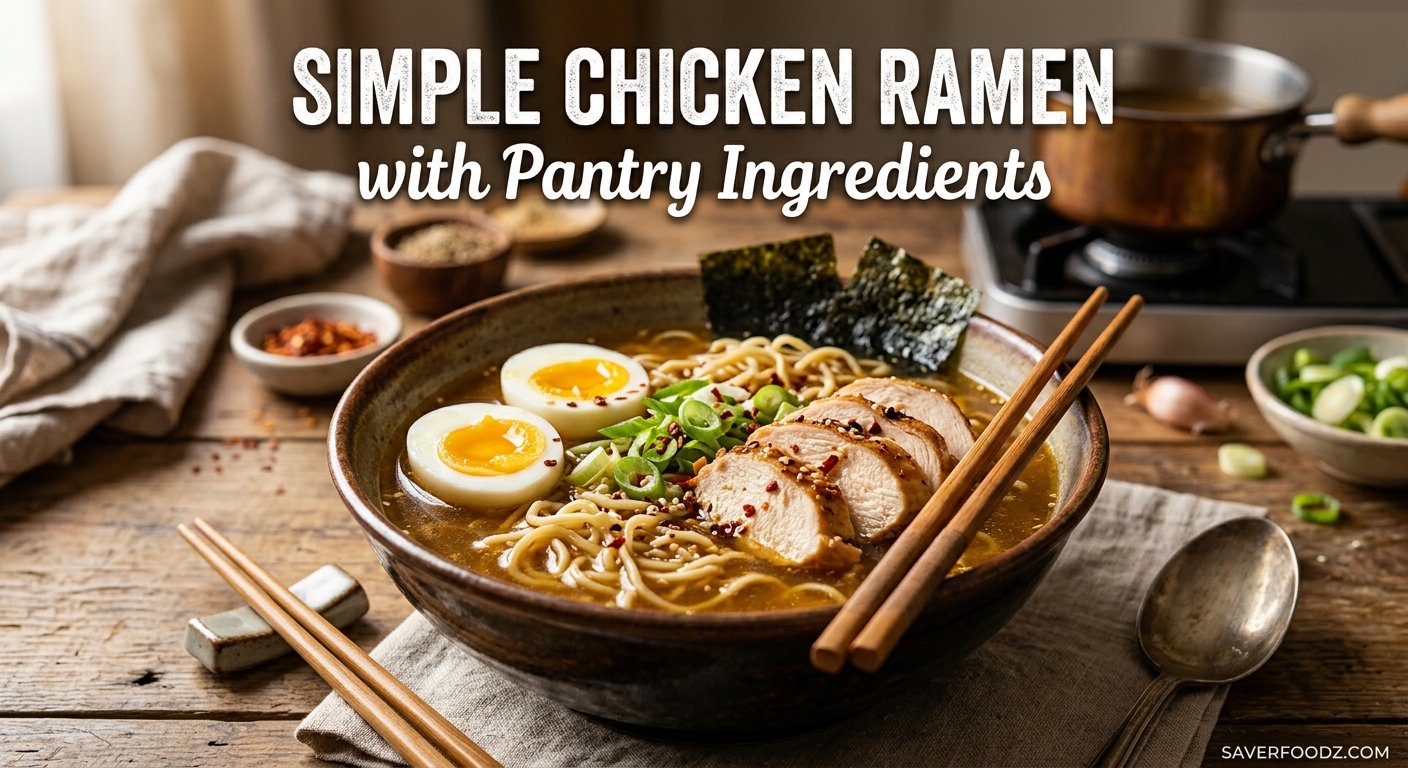
Simple Chicken Ramen with Pantry Ingredients
When you need something warm, filling, and comforting without making a trip to the grocery store, simple chicken ramen with pantry ingredients is the kind of recipe that saves the day. It is quick, budget-friendly, and flexible enough to work with whatever you already have in your kitchen.
You do not need specialty Asian ingredients or a long shopping list to make a satisfying bowl of chicken ramen. With instant ramen noodles, cooked or fresh chicken, a few pantry seasonings, and a simple broth, you can turn basic ingredients into a flavorful homemade meal.
This easy chicken ramen is perfect for busy weeknights, lazy weekends, or those evenings when you want a comforting bowl of noodles without spending much time in the kitchen. You can also add vegetables, eggs, leftover chicken, or your favorite toppings to make it your own.
Why You Will Love This Simple Chicken Ramen
There are plenty of reasons to keep this recipe in your regular meal rotation.
First, it uses ingredients that many people already have at home. Instant ramen noodles are inexpensive and easy to store, while chicken can be fresh, frozen, leftover, or even rotisserie chicken.
Second, the recipe is fast. You can have a hot bowl of ramen ready in about 20 minutes, making it an excellent choice for busy nights.
Most importantly, it tastes much better than plain packaged ramen. A few simple additions such as garlic, soy sauce, black pepper, and a little sesame oil can make a huge difference.
You can also adjust the recipe based on what is available. Add frozen vegetables if you have them, toss in a boiled egg, or make the broth spicy with chili flakes or hot sauce.
Ingredients for Simple Chicken Ramen with Pantry Ingredients
The ingredient list is intentionally simple. You can make substitutions depending on what you have available.
For the Ramen
- 2 packs instant ramen noodles
- 1 ½ cups cooked chicken, shredded or sliced
- 4 cups chicken broth or water with chicken bouillon
- 2 cloves garlic, minced
- 1 tablespoon soy sauce
- 1 teaspoon sesame oil
- ½ teaspoon ground black pepper
- ½ teaspoon ginger powder or 1 teaspoon fresh grated ginger
- 1 teaspoon chili sauce or red pepper flakes, optional
- 1 teaspoon honey or brown sugar, optional
- 1 tablespoon cooking oil
Optional Pantry-Friendly Add-Ins
You can add any of these if you have them:
- Frozen peas
- Frozen mixed vegetables
- Corn
- Sliced carrots
- Green onions
- Spinach
- Cabbage
- Mushrooms
- Boiled eggs
- Garlic powder
- Onion powder
- Hot sauce
- Sesame seeds
The beauty of this recipe is that there is no strict rule about the toppings. The basic chicken ramen works perfectly on its own, but extra vegetables and toppings can make it more substantial.
What Kind of Chicken Should You Use?
One of the best things about this recipe is that you do not need a special cut of chicken.
Leftover roasted chicken works beautifully. So does rotisserie chicken, baked chicken breast, cooked chicken thighs, or even leftover grilled chicken.
If you have raw chicken, simply cut it into small pieces and cook it directly in the broth before adding the noodles. Chicken thighs are especially good because they stay tender and flavorful, but chicken breast works just as well.
You can even use shredded leftover chicken from another meal. This makes the recipe especially useful when you are trying to reduce food waste.
How to Make Simple Chicken Ramen with Pantry Ingredients
Step 1: Prepare the Chicken
If you are using leftover or cooked chicken, shred or slice it into bite-sized pieces and set it aside.
If you are starting with raw chicken, cut it into small pieces. You can cook it in the broth later, making this recipe a convenient one-pot meal.
Step 2: Build the Flavorful Broth
Place a medium saucepan over medium heat and add the cooking oil.
Add the minced garlic and cook for about 30 seconds. You do not want the garlic to become dark or burnt. You simply want it to become fragrant.
Pour in the chicken broth. If you do not have chicken broth, water mixed with chicken bouillon works well.
Add soy sauce, black pepper, ginger, and chili sauce if you are using it.
Stir everything together and bring the broth to a gentle simmer.
This simple combination creates a savory broth with much more flavor than plain ramen seasoning.
Step 3: Add the Chicken
If your chicken is already cooked, add it to the simmering broth and allow it to heat through for about 2 to 3 minutes.
If you are using raw chicken, add it earlier and simmer until the chicken is completely cooked through. Depending on the size of the pieces, this may take approximately 6 to 10 minutes.
Always make sure chicken is fully cooked before serving.
Step 4: Add the Ramen Noodles
Add the ramen noodles directly to the hot broth.
Cook according to the package directions, usually for around 2 to 4 minutes. Stir occasionally with a fork or chopsticks to separate the noodles.
Be careful not to overcook them. Ramen noodles continue absorbing broth after cooking, so slightly firm noodles are often better than very soft noodles.
Step 5: Finish the Ramen
Turn off the heat and stir in the sesame oil.
Taste the broth and adjust the seasoning. If you want more saltiness, add a little extra soy sauce. For sweetness, add a small amount of honey or brown sugar. If you like heat, add more chili sauce or red pepper flakes.
Pour the ramen into bowls and add your favorite toppings.
Your simple chicken ramen is ready to enjoy.
How to Make the Broth Taste Better
The broth is what makes homemade ramen feel special. Fortunately, you do not need many ingredients to improve it.
Garlic adds a warm savory flavor.
Soy sauce gives the broth saltiness and umami.
Ginger adds freshness and a gentle spicy aroma.
Sesame oil gives the finished ramen a nutty fragrance.
Chili sauce adds heat and extra flavor.
If you have chicken bouillon, adding a small amount to water can create a richer base when chicken broth is not available.
Another easy trick is to add a spoonful of the ramen seasoning packet. You do not necessarily need to use the entire packet because soy sauce and other seasonings are already adding flavor.
Easy Vegetable Additions
This recipe is a great way to use vegetables hiding in your freezer or pantry.
Frozen mixed vegetables are one of the easiest choices. Add them to the broth a few minutes before the noodles so they have time to heat through.
Frozen peas and corn work particularly well.
Fresh vegetables can also be added. Thinly sliced carrots, cabbage, spinach, mushrooms, and green onions all work nicely.
If you are using leafy greens such as spinach, add them near the end because they cook very quickly.
For carrots and other firm vegetables, slice them thinly so they cook quickly.
Add an Egg for Extra Protein
An egg can make simple chicken ramen feel like a complete meal.
The easiest option is to boil an egg separately and place it on top of the finished ramen.
For a softer egg yolk, boil the egg for approximately 6 to 7 minutes and transfer it to cold water immediately after cooking.
You can also crack an egg directly into the simmering ramen broth. Cover the pot and let it cook until the white is set and the yolk reaches your preferred consistency.
For a richer bowl, gently stir the egg into the hot broth to create thin ribbons, similar to egg-drop soup.
Can You Make Chicken Ramen Without Fresh Vegetables?
Absolutely.
In fact, simple chicken ramen with pantry ingredients is ideal when fresh vegetables are not available.
Frozen vegetables are convenient and often taste great in noodle soups. Canned corn can also be drained and added directly to the ramen.
You can even keep the recipe extremely simple with just chicken, noodles, broth, garlic, and soy sauce.
The goal is not to use a long list of ingredients. The goal is to turn simple pantry staples into a satisfying meal.
Using Leftover Chicken
Leftover chicken is one of the best ingredients for homemade ramen.
If you have leftover baked chicken from dinner, shred it and store it in the refrigerator. When you are ready to make ramen, simply warm the chicken in the broth.
Rotisserie chicken is another excellent option. Dark meat tends to be especially flavorful, but breast meat works perfectly too.
This makes chicken ramen a useful leftover meal because you can transform yesterday’s chicken into something that feels completely different.
How to Make Spicy Chicken Ramen
If you enjoy spicy food, this recipe can easily be turned into spicy chicken ramen.
Add red pepper flakes, hot sauce, chili garlic sauce, or your favorite chili paste to the broth.
Start with a small amount and taste before adding more.
For a sweet and spicy flavor, combine chili sauce with a little honey or brown sugar. The sweetness balances the heat and gives the broth a richer flavor.
You can also add freshly ground black pepper for a milder type of heat.
How to Make Creamy Chicken Ramen
For a richer bowl, you can turn this simple ramen into creamy chicken ramen.
After the noodles are cooked, reduce the heat and add a small splash of milk or coconut milk. Stir gently until combined.
You can also add a spoonful of peanut butter for a creamy, nutty variation. Combine it with soy sauce and chili sauce for a quick spicy peanut ramen.
Do not add too much liquid at once. Start with a small amount and adjust until you reach the consistency you like.
Tips for the Best Homemade Chicken Ramen
Do Not Overcook the Noodles
Ramen noodles cook very quickly. Keep an eye on them and remove the pot from the heat when they are just tender.
Taste Before Adding More Salt
Soy sauce and bouillon can both be salty. Always taste the broth before adding additional salt.
Use Leftovers
This recipe is perfect for leftover chicken and vegetables. It is an easy way to create a new meal from ingredients that might otherwise go unused.
Keep the Broth Flavorful
If you are using plain water instead of chicken broth, use chicken bouillon or extra seasonings to build flavor.
Add Sesame Oil at the End
A small amount of sesame oil added after cooking gives the ramen a stronger aroma and helps preserve its flavor.
Keep Toppings Simple
You do not need ten toppings to make good ramen. One boiled egg, some green onion, or a little chili sauce can be enough.
Common Mistakes to Avoid
One common mistake is adding too much soy sauce at the beginning. Because the broth reduces slightly during cooking, the flavor can become saltier than expected.
Another mistake is overcooking the noodles. Soft noodles can quickly become mushy, especially if the ramen sits in the hot broth for several minutes.
Adding too many vegetables at once can also change the balance of the dish. Start with a small amount and add more next time if you prefer.
Finally, do not forget to taste the broth before serving. A small adjustment at the end can make a big difference.
Easy Chicken Ramen Variations
Once you know the basic recipe, you can change it in many ways.
Chicken and Vegetable Ramen
Add frozen mixed vegetables, corn, peas, or spinach for a colorful and filling bowl.
Spicy Chicken Ramen
Add chili sauce, hot sauce, or red pepper flakes for extra heat.
Garlic Chicken Ramen
Increase the garlic and finish with sesame oil for a stronger garlic flavor.
Chicken Egg Ramen
Top the ramen with a soft-boiled egg for extra protein and richness.
Chicken Peanut Ramen
Stir a spoonful of peanut butter into the broth with soy sauce and chili sauce.
Ginger Chicken Ramen
Use extra fresh ginger for a bright, warming flavor.
Leftover Chicken Ramen
Use leftover roasted or rotisserie chicken to make this recipe even faster.
What to Serve with Chicken Ramen
Chicken ramen is filling enough to serve as a complete meal, but you can add a simple side if you want.
Steamed vegetables, cucumber salad, crispy spring rolls, or simple toast can work well.
If you are making ramen for lunch, you may not need anything else. A bowl of chicken, noodles, vegetables, and broth is already satisfying.
How to Store Leftover Ramen
Ramen noodles absorb broth as they sit, so the texture is best when the dish is eaten immediately.
If you know you will have leftovers, store the broth and noodles separately whenever possible.
Place the cooled chicken and broth in an airtight container and refrigerate. Store cooked noodles separately.
When ready to eat, reheat the broth and chicken in a saucepan and add freshly cooked ramen noodles.
This method gives you much better texture than reheating noodles that have already been sitting in broth.
Frequently Asked Questions
Can I make chicken ramen without a ramen seasoning packet?
Yes. Chicken broth, soy sauce, garlic, ginger, black pepper, and sesame oil can create a flavorful broth without the seasoning packet.
Can I use leftover chicken?
Absolutely. Leftover roasted chicken, baked chicken, grilled chicken, and rotisserie chicken all work well.
Can I use frozen chicken?
You can use frozen chicken, but it is safest to thaw it first or follow a cooking method specifically designed for frozen chicken. The chicken should reach a safe internal temperature before serving.
Can I use water instead of chicken broth?
Yes. Add chicken bouillon or extra seasonings to give plain water more flavor.
What vegetables go well with chicken ramen?
Frozen mixed vegetables, peas, corn, carrots, spinach, cabbage, mushrooms, and green onions are all good choices.
How can I make ramen less salty?
Use low-sodium chicken broth and low-sodium soy sauce when available. You can also reduce the amount of soy sauce and add more broth.
Can I make this recipe ahead of time?
You can prepare the broth and chicken ahead of time, but it is best to cook the noodles just before serving.
Final Thoughts
Simple chicken ramen with pantry ingredients proves that you do not need an elaborate grocery list to make a comforting homemade meal. With a package of ramen noodles, chicken, broth, and a few basic seasonings, you can create a flavorful bowl in a surprisingly short amount of time.
The recipe is also easy to customize. Add frozen vegetables when you have them, use leftover chicken to save time, add an egg for extra protein, or bring in some chili sauce when you want a spicy kick.
It is the kind of meal that works when you are tired, hungry, and simply want something warm without a lot of effort. Keep a few packs of ramen and some basic pantry ingredients on hand, and you will always have the foundation for an easy chicken dinner.
Once you try this version, you can adjust the broth, toppings, vegetables, and spice level to match your own taste. That flexibility is what makes homemade ramen so useful—and so enjoyable.